


What Makes an AI Lead Generation Agency Different From Traditional Lead Generation Services?
Lead generation has changed a lot over the last few years. Earlier, businesses could depend on cold calls, mass email campaigns, generic advertisements, and purchased databases to bring in enquiries. Those methods still exist, but the results are no longer as predictable as they once were. Buyers spend more time researching online, comparing options, reading reviews, and interacting with brands before they ever speak to a sales representative.
This is where an AI lead generation agency works differently.
Instead of chasing every possible prospect, an AI lead generation agency focuses on identifying people who already show signs of genuine buying interest. AI analyses search behaviour, website interactions, content engagement, demographics, previous customer patterns, and hundreds of other signals that would take a human team days to evaluate manually.
For example, a manufacturing company may receive hundreds of website visitors every week. Traditional lead generation might treat every enquiry almost the same. An AI lead generation agency can recognise which visitors repeatedly return to pricing pages, download product catalogues, spend time comparing services, or interact with multiple pieces of content. Those visitors often represent stronger sales opportunities than someone who lands on the homepage for a few seconds.
Another major difference is speed.
Traditional marketing teams often analyse campaign performance after several weeks. AI continuously studies campaign data, adjusts targeting, identifies changing customer behaviour, and recommends improvements much faster. That allows businesses to respond before valuable opportunities are lost.
Personalisation also becomes much stronger.
Instead of sending identical messages to thousands of people, an AI lead generation agency helps create communication based on customer interests, industry, location, buying stage, and previous interactions. This usually results in better engagement because people receive information that actually matches what they are looking for.
At the same time, AI does not replace human experience.
I’ve seen campaigns where businesses expected AI software to solve every marketing problem automatically. That rarely works. AI can process huge amounts of information, but experienced marketers still need to understand customer psychology, create compelling messaging, optimise landing pages, and build trust throughout the buying journey. The best results come when AI supports strategic decision making instead of replacing it.
That is why businesses increasingly prefer working with an AI lead generation agency that combines technology with experienced marketing professionals rather than depending entirely on automation.
Why Businesses Are Struggling to Generate Quality Leads Through Conventional Marketing
Many business owners believe they have a traffic problem. In reality, they often have a lead quality problem.
A website may receive thousands of visitors every month, yet only a handful become genuine customers. Social media campaigns may generate hundreds of likes but very few serious enquiries. Paid advertisements can consume large budgets without producing consistent sales.
This situation has become increasingly common because customer behaviour has changed faster than many marketing strategies.
People rarely make purchasing decisions immediately after seeing one advertisement. They compare multiple providers, watch videos, search Google several times, read customer reviews, ask questions on social platforms, and sometimes return weeks later before making contact.
Traditional marketing methods often fail to connect these different interactions.
Another issue is broad targeting.
Many businesses still create campaigns that try to reach everyone. While this increases visibility, it usually attracts a large number of people who have little intention of purchasing. Sales teams then spend valuable time following up with enquiries that never convert.
I remember reviewing a campaign for a B2B software company that celebrated generating more than 2,000 leads in a single month. It sounded impressive until the sales team explained that only around 40 enquiries matched their ideal customer profile. The marketing numbers looked strong. Revenue did not.
That experience stayed with me because it highlighted something businesses often overlook. More leads do not always mean better business.
Data management is another challenge.
Many organisations collect information through websites, social media, email campaigns, webinars, events, and CRM systems. Unfortunately, this data often remains scattered across different platforms, making it difficult to understand which marketing activities actually influence buying decisions.
Conventional marketing also depends heavily on manual analysis.
Teams manually prepare reports, review campaign performance, segment customer lists, and optimise targeting. By the time these adjustments are implemented, customer interests may already have shifted.
I might be wrong here because this doesn’t apply to every industry, but I’ve noticed that businesses relying only on traditional lead generation often react to market changes instead of anticipating them.
That difference becomes significant in highly competitive industries where customer expectations continue changing almost every month.
How an AI Lead Generation Agency Identifies High Intent Prospects Across Multiple Channels
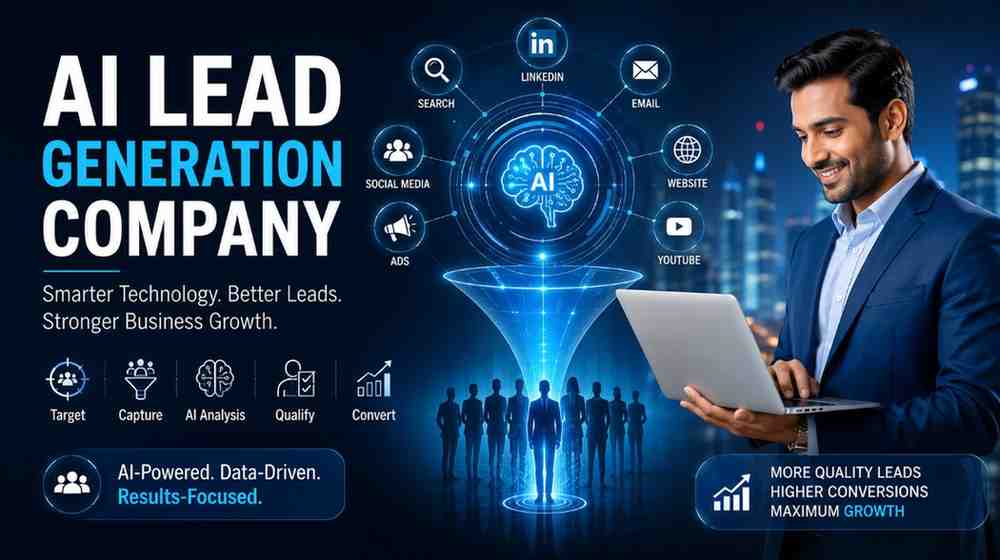
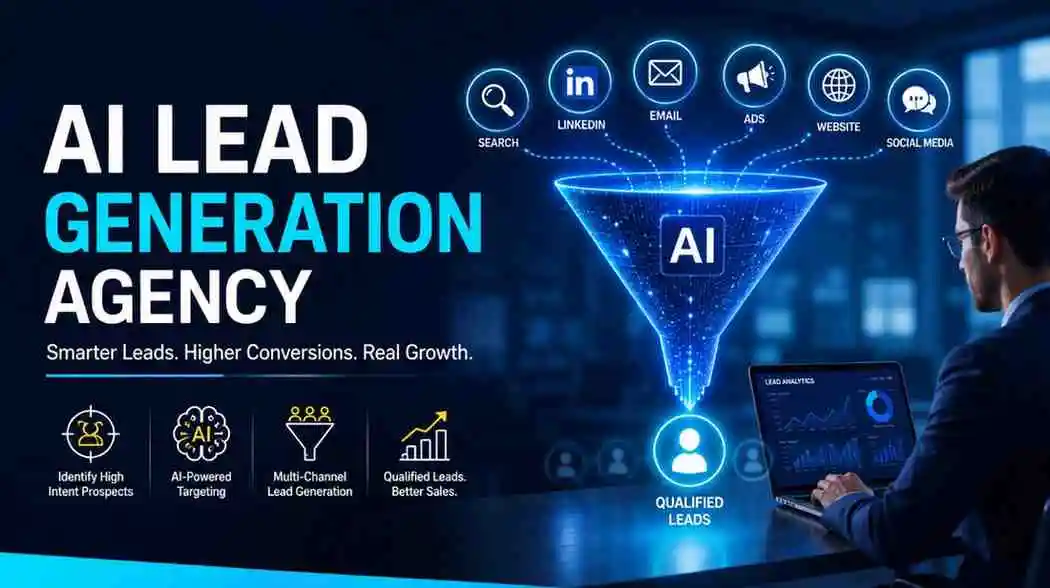
One of the biggest strengths of an AI lead generation agency is its ability to combine information from multiple customer touchpoints instead of evaluating each marketing channel separately.
A potential customer may first discover a business through Google Search. A few days later they might visit the website from LinkedIn, subscribe to a newsletter, watch product videos, return through a remarketing advertisement, and finally submit an enquiry form.
Looking at any one interaction in isolation tells only part of the story.
AI connects these actions to build a much clearer understanding of customer intent.
It studies behavioural signals such as page visits, time spent on important service pages, repeated searches, email engagement, content downloads, chatbot conversations, advertising interactions, previous purchases, device usage, geographic trends, and many other indicators that suggest whether someone is moving closer to making a buying decision.
This allows businesses to prioritise prospects who demonstrate genuine commercial interest rather than casual browsing behaviour.
Lead scoring becomes much more accurate as well.
Instead of assigning scores based on a few manual rules, AI evaluates hundreds of behavioural patterns simultaneously. Sales teams receive better-qualified prospects, allowing them to focus their efforts where conversions are more likely.
Predictive analysis adds another advantage.
Rather than simply reporting what happened yesterday, AI estimates which leads are most likely to convert based on historical performance and current customer behaviour. Marketing teams can then allocate budgets more effectively and improve campaign performance over time.
Of course, no prediction model is perfect. Customer decisions are influenced by pricing, competition, internal approvals, economic conditions, and many factors that algorithms cannot fully predict. Earlier I mentioned AI’s accuracy with confidence. The reality is that even sophisticated systems occasionally misread intent, especially when buying cycles become unusually complex. That doesn’t make AI ineffective. It simply reminds us that technology still benefits from experienced human judgement.
An experienced AI lead generation agency understands this balance. AI identifies opportunities at scale, while marketers validate those insights, refine campaigns, improve messaging, and ensure every qualified lead receives meaningful engagement. That combination often produces stronger long-term results than relying on either technology or manual processes alone.
The Complete AI Lead Generation Process From Audience Research to Qualified Sales Opportunities
Many businesses think lead generation begins when an advertisement goes live. In my experience, that is usually where expensive mistakes begin.
A successful AI lead generation agency starts much earlier. Before spending a single rupee on advertising or launching an email campaign, it tries to understand who the ideal customer actually is. That sounds obvious, but I have worked with companies that wanted to target “everyone.” It almost never works.
The first stage is audience research.
AI analyses existing customer data, website behaviour, CRM records, purchase history, industry trends, competitor positioning, and search intent. Instead of relying on assumptions, it starts identifying patterns. Which industries convert faster? Which company sizes generate higher revenue? Which locations respond better? Which content attracts decision makers instead of casual visitors?
Those answers shape everything that follows.
The next step is building audience segments.
Not every prospect is looking for the same solution. Someone searching for basic information behaves very differently from someone requesting pricing or comparing vendors. AI separates these audiences based on behaviour, interests, engagement levels, and buying intent so that every campaign feels more relevant.
Content and messaging come next.
This part still needs experienced marketers. AI can suggest ideas, analyse performance, and identify trends, but people connect with clear communication, not algorithms. Headlines, landing pages, emails, advertisements, and lead magnets must answer real business questions. Otherwise even the smartest technology struggles.
Campaign execution follows across multiple platforms.
An AI lead generation agency doesn’t depend on one traffic source. It combines SEO, Google Ads, LinkedIn campaigns, Meta advertising, email automation, remarketing, content marketing, search experience optimisation, and website improvements to create several paths through which potential customers can enter the sales funnel.
As leads begin interacting, AI continuously evaluates their behaviour.
Someone downloading a whitepaper may receive educational content. Another visitor requesting a demo might move directly to the sales team. A returning visitor spending several minutes on pricing pages may receive personalised follow up communication.
This is where lead scoring becomes valuable.
Instead of passing every enquiry to the sales department, AI ranks prospects according to their likelihood of converting. That helps sales teams spend their time speaking with people who are genuinely considering a purchase rather than chasing every form submission.
The process doesn’t stop after a lead enters the CRM.
AI keeps learning from every conversation, conversion, rejection, and successful sale. Campaigns improve because the system recognises which audiences, messages, keywords, and channels consistently generate better outcomes.
Sometimes that learning produces surprising results.
I once expected a campaign targeting large enterprises to perform best. Instead, medium sized companies converted almost twice as often. We changed the strategy completely. I still remember arguing against that decision initially. The numbers eventually proved me wrong.
That happens more often than marketers like to admit.
How AI Improves Lead Quality, Conversion Rates, and Sales Team Productivity
Generating more enquiries sounds attractive.
Generating better enquiries changes businesses.
There is a difference.
An experienced AI lead generation agency focuses less on the number of leads and more on whether those leads are likely to become paying customers. That shift alone changes how marketing campaigns are planned.
AI studies behavioural patterns that humans may overlook. It notices repeated website visits, content engagement, search history, email interactions, form completion rates, previous purchases, device usage, and dozens of smaller indicators that together suggest genuine buying intent.
As this information accumulates, lead quality improves.
Sales teams receive prospects who already understand the product or service, have interacted with multiple pieces of content, and often arrive with clearer expectations. Conversations become shorter because much of the education has already happened during the customer’s online journey.
Conversion rates often improve for another reason.
AI helps personalise communication at scale.
Instead of sending identical follow up emails to every prospect, businesses can deliver content that matches the customer’s industry, interests, buying stage, or previous actions. Someone researching digital marketing services may receive case studies, while another prospect interested in AI automation might receive implementation examples.
That relevance matters.
People respond more positively when communication reflects what they are already trying to solve.
Sales productivity benefits too.
Manual lead qualification consumes enormous amounts of time. Representatives spend hours reviewing CRM records, checking company profiles, following up inactive prospects, and preparing reports. AI automates much of this repetitive work, allowing sales professionals to spend more time building relationships and closing opportunities.
I have seen businesses reduce follow up delays simply because AI organised leads according to priority. Nothing dramatic happened. No revolutionary software appeared. The team just stopped wasting time on enquiries that had almost no chance of converting.
Still, AI is not perfect.
Earlier I spoke about AI improving efficiency with confidence. There are situations where customer behaviour becomes unpredictable, especially during economic uncertainty or sudden industry changes. Models trained on historical data may not immediately recognise new buying patterns. Human judgement still matters, perhaps more than many software companies like to admit.
That balance between automation and experience usually produces the strongest long term results.
Common Mistakes Businesses Make Before Hiring an AI Lead Generation Agency
One mistake appears again and again.
Businesses start looking for an AI lead generation agency only after lead generation has already become a serious problem. Marketing budgets have been spent. Sales pipelines are shrinking. Management wants immediate results.
Pressure like that rarely helps.
Another common mistake is believing AI automatically guarantees qualified leads.
It doesn’t.
AI improves decision making. It analyses data faster than people can. It identifies patterns humans may overlook. But if the website creates a poor first impression, if landing pages confuse visitors, or if sales teams respond slowly, technology alone cannot solve those issues.
Choosing an agency based only on pricing creates another problem.
Lower costs often mean fewer strategy sessions, limited campaign optimisation, weak reporting, or generic marketing templates that are used across multiple industries. Businesses save money initially but lose opportunities later.
I have watched companies switch agencies three times within a year because every provider promised huge lead volumes instead of discussing lead quality.
That conversation always worries me a little.
Ignoring existing business data is another mistake.
Many companies already possess valuable customer information inside CRMs, email platforms, sales reports, and analytics tools. A capable AI lead generation agency uses this information to build better campaigns rather than starting from zero.
Some businesses also expect instant success.
Search visibility takes time. Paid campaigns require testing. AI models become more accurate as additional customer interactions are collected. Sustainable lead generation rarely happens in a week.
One thing I strongly disagree with is agencies promising guaranteed numbers before understanding the business. Marketing is influenced by competition, pricing, customer demand, product quality, and sales execution. Anyone guaranteeing exact lead volumes before analysing these factors makes me uncomfortable.
Perhaps I sound overly cautious.
Maybe.
Industries That Benefit the Most From AI Powered Lead Generation Strategies
Almost every industry can benefit from AI driven marketing, but the impact is usually greater where customer decisions involve research, comparison, or longer buying cycles.
Professional service firms are a good example.
Consultants, legal firms, financial advisors, accounting companies, and technology providers often depend on trust before clients make contact. AI helps identify prospects showing repeated engagement, allowing businesses to nurture relationships before direct sales conversations begin.
Healthcare and wellness businesses also benefit.
Hospitals, diagnostic centres, clinics, nutraceutical manufacturers, and healthcare service providers receive enquiries through multiple channels. AI helps organise those enquiries, identify urgent requests, and personalise communication according to customer interests.
Manufacturing companies often underestimate digital lead generation.
Industrial buyers spend considerable time researching suppliers online before requesting quotations. An AI lead generation agency can analyse this behaviour and create campaigns that attract purchasing managers, distributors, exporters, and business owners actively looking for manufacturing partners.
Real estate is another sector where AI makes a noticeable difference.
Instead of treating every property enquiry equally, developers can prioritise buyers based on location preferences, property searches, budget signals, previous interactions, and engagement history.
Educational institutions, software companies, ecommerce businesses, B2B service providers, logistics companies, insurance firms, and franchise businesses also benefit because customer journeys usually involve multiple interactions before final decisions are made.
There are exceptions though.
Very small local businesses with limited digital presence sometimes expect AI to solve problems that actually require better customer service, stronger branding, or clearer positioning first. Technology helps, but it cannot replace business fundamentals.
And sometimes people simply want to speak with another person.
Why StratMarketer Combines AI, Human Expertise, and Performance Marketing for Better Lead Generation
At StratMarketer, AI is treated as a decision support system rather than a replacement for experienced marketers.
That distinction matters.
Every business has different customers, different competitors, different buying cycles, and different sales challenges. Using identical marketing campaigns across every industry rarely produces consistent results. StratMarketer begins by understanding how customers search, compare, and finally decide before recommending any marketing strategy.
The team combines AI driven audience research, search engine optimisation, Google Ads, performance marketing, content marketing, conversion focused landing pages, automation, analytics, and customer journey analysis into one connected lead generation system instead of treating each channel separately.
An AI lead generation agency should never measure success only through impressions or website traffic.
StratMarketer focuses on business outcomes that actually matter, including qualified enquiries, lower acquisition costs, stronger conversion rates, better customer engagement, and measurable return on marketing investment.
AI continuously analyses campaign performance, identifies behavioural trends, and highlights optimisation opportunities. Experienced strategists then interpret those insights, improve messaging, refine targeting, adjust budgets, and work alongside sales objectives instead of relying only on automated recommendations.
I appreciate this approach because I have seen businesses become overly dependent on software dashboards while losing sight of the people behind the numbers. Marketing still involves emotions, trust, timing, and conversations that algorithms cannot fully understand.
Perhaps that sounds old fashioned.
I am not completely sure it is.
The businesses that usually achieve the strongest long term growth are not the ones using the most AI. They are often the ones using AI intelligently while allowing experienced professionals to make the final strategic decisions. That combination is exactly where StratMarketer positions its AI lead generation services, helping businesses generate not just more enquiries, but more meaningful sales opportunities that support sustainable growth.
Questions Every Business Should Ask Before Choosing an AI Lead Generation Agency
Choosing an AI lead generation agency is not the same as hiring someone to run advertisements. The agency becomes part of your sales process, customer acquisition strategy, and long term business growth. A wrong decision can waste months of marketing effort, while the right one can steadily improve the quality of enquiries your sales team receives.
One question should come first.
How does the agency define a qualified lead?
Every business has a different definition. For one company, a lead may simply be someone filling out a contact form. For another, it could be a decision maker from a specific industry with a defined budget. If the agency cannot clearly explain this, campaigns often become focused on quantity instead of quality.
Another important question is about strategy.
Ask whether they build campaigns based on your business goals or simply apply the same process to every client. A genuine AI lead generation agency should spend time understanding your industry, competitors, customer journey, and existing sales process before recommending solutions.
You should also ask what role AI actually plays.
Some agencies mention AI in every presentation, but their campaigns are almost entirely manual. Others depend so heavily on automation that they ignore the human side of marketing. A balanced approach usually delivers stronger and more consistent outcomes.
Reporting is another area that deserves attention.
Will you receive reports showing only clicks and impressions, or will they explain lead quality, conversion rates, customer acquisition costs, and revenue contribution? Marketing reports should help business owners make decisions, not just display attractive graphs.
Don’t hesitate to ask how campaigns are improved over time.
Markets change. Customer behaviour changes. Competitors introduce new offers. A capable agency should regularly analyse performance, test different strategies, and optimise campaigns instead of leaving everything on autopilot.
One question that often gets ignored is about collaboration with the sales team.
Marketing and sales should not work separately. If the agency collects feedback from your sales representatives about lead quality, objection patterns, and customer conversations, future campaigns usually become much more accurate.
I would also ask for real examples instead of impressive promises.
Case studies, measurable outcomes, client experiences, and transparent discussions about challenges tell you far more than claims of guaranteed success.
There is one thing I remain cautious about.
If an AI lead generation agency guarantees a fixed number of qualified leads before studying your business, competition, pricing, and target audience, I would probably keep looking. Marketing rarely works with that level of certainty.
Sometimes the most honest answer an agency can give is, “We need to analyse your business first.”
Frequently Asked Questions About AI Lead Generation Agency
What does an AI lead generation agency do?
An AI lead generation agency helps businesses attract, identify, qualify, and nurture potential customers using artificial intelligence, data analysis, automation, and digital marketing strategies. The goal is to generate higher quality leads rather than simply increasing enquiry numbers.
How is an AI lead generation agency different from a traditional marketing agency?
Traditional agencies often rely heavily on manual campaign management and broad audience targeting. An AI lead generation agency uses behavioural data, predictive analysis, automation, and machine learning to identify prospects who are more likely to convert into paying customers while continuously improving campaign performance.
Can AI replace human marketers in lead generation?
No. AI processes data faster and identifies useful patterns, but experienced marketers still create strategy, understand customer psychology, write persuasive messaging, optimise campaigns, and make business decisions. The strongest results usually come from combining AI with human expertise.
Which businesses benefit the most from an AI lead generation agency?
B2B companies, manufacturers, SaaS businesses, healthcare providers, educational institutions, professional service firms, real estate companies, financial consultants, ecommerce brands, and technology businesses often benefit because their customers research extensively before making purchasing decisions.
How long does it take to see results from AI lead generation?
It depends on the marketing channels being used. Paid campaigns may begin generating enquiries within a few weeks, while SEO and content marketing generally require several months to build consistent organic lead flow. AI also becomes more effective as it collects more customer interaction data.
Does an AI lead generation agency only generate online leads?
Not necessarily. Many businesses use AI to support both online and offline sales efforts. Website enquiries, phone calls, event registrations, webinars, referrals, CRM data, and customer interactions can all become part of a connected lead generation strategy.
How does StratMarketer help businesses generate qualified leads?
StratMarketer combines AI driven insights with experienced digital marketing professionals to create customised lead generation strategies. Instead of focusing only on traffic or impressions, the team works to improve lead quality, conversion rates, customer engagement, and measurable business growth through SEO, performance marketing, automation, content marketing, and conversion optimisation.
One final thought keeps coming back to me. Businesses often spend weeks comparing agencies, software, and pricing. Very few spend the same amount of time understanding their own customers first. That small shift in thinking changes almost everything.