


What an AI Chatbot Marketing Agency Actually Does for a Business
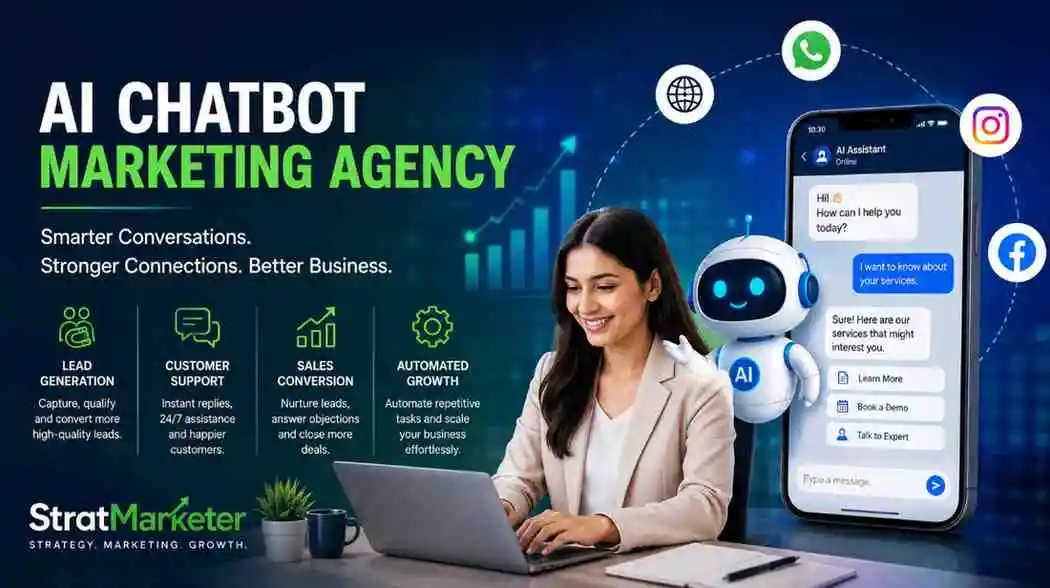
When a business hears the term AI chatbot marketing agency, the first thought is often a chatbot sitting on a website and answering questions. That is only the visible part.
The real work starts behind the chat window.
An AI chatbot marketing agency looks at where customer conversations are happening, what people are asking, where leads are getting stuck and which repetitive tasks are taking up the sales or support team’s time. The chatbot is then planned around those actual problems rather than simply adding a chat box because everyone else has one.
This distinction matters.
A poorly planned chatbot can make a business look less helpful. Someone asks a simple question, receives a strange automated answer, gets pushed through five buttons and eventually searches for a phone number. I have seen this happen with service businesses where the chatbot was technically working but nobody had thought properly about the customer’s actual conversation.
A good AI chatbot marketing agency approaches the process differently. The first question is usually not, “Which chatbot software should we use?” It is, “What should happen when a customer starts talking to the business?”
For an Indian business, this can become quite detailed. A customer may visit a website from Google, ask about pricing, leave the page, return through WhatsApp and then expect the sales team to know what was discussed earlier. Another customer may prefer English while someone else is more comfortable using Hindi or a mixture of both.
These are not unusual behaviours.
An AI chatbot marketing agency can help map these conversations and decide which parts should be automated and which should be handed to a human.
For example, imagine a solar installation company receiving enquiries throughout the day. Most enquiries may contain the same basic questions.
What is the price?
Do you install in my city?
How many panels do I need?
Is financing available?
How long does installation take?
Instead of making a sales executive answer the same first-level questions repeatedly, an AI chatbot can handle the initial conversation, collect location and requirement details, and pass a qualified enquiry to the sales team.
The important part is what happens after that.
The chatbot should not simply collect a phone number and say someone will contact you. It should understand enough of the conversation to make the next step useful.
This is where marketing comes into the picture.
An AI chatbot marketing agency can connect conversations with lead generation, campaign landing pages, CRM systems, remarketing workflows and follow ups. The aim is to make the conversation part of the marketing process rather than keeping it isolated from everything else.
I personally prefer this approach because businesses often spend heavily on generating traffic and then treat the conversation after the click as an afterthought. That is where a lot of potential enquiries quietly disappear.
A chatbot can also be used before a person becomes a lead.
Someone reading a service page may not be ready to submit a form. But they may ask, “Do you work with small businesses?” That question is a buying signal. The chatbot can answer it and continue the conversation naturally.
There is another side to this which is often ignored. Chatbots are not replacements for people in every situation.
For complicated complaints, high-value sales discussions, technical consultations or emotionally sensitive customer issues, a human may still be the better choice. The role of an AI chatbot marketing agency is not to automate every sentence a customer could possibly type. It is to decide where automation genuinely makes sense.
That judgement is important.
Why Businesses Are Moving From Basic Chatbots to AI Powered Customer Conversations
Traditional chatbots usually worked around fixed rules.
You clicked an option. The bot gave an answer. Then you selected another option. If your question did not fit the predefined path, the conversation usually broke.
That model still has some uses. For very simple tasks, rule-based chatbots can be perfectly adequate.
But customers do not always speak in menu options.
They write things like, “I need a 2 BHK near the metro but my budget is around 70 lakh and I want possession next year.”
That is very different from clicking “Property” and then “Residential.”
AI powered chatbots can interpret the meaning behind a message and respond according to the context of the conversation. This makes the interaction feel less like filling out a form and more like speaking with an initial sales or support assistant.
An AI chatbot marketing agency has to think carefully about this because better language understanding does not automatically mean better customer experience.
I have a concern here. Businesses sometimes become too impressed by how naturally an AI chatbot can speak. They test it with a few clever questions, see a good answer and assume the system is ready for customers.
It is not that simple.
The chatbot needs accurate business information. It needs clear rules about pricing, services, availability, policies and escalation. It also needs to know when it does not know something.
That last part is extremely important.
An AI chatbot that confidently gives incorrect information can create more damage than a chatbot that simply says, “I need to connect you with our team.”
Suppose an education consultancy uses an AI chatbot to answer questions about admissions. If the bot gives an outdated eligibility requirement, the issue is no longer just a poor chat experience. The customer may make a decision based on incorrect information.
This is why an experienced AI chatbot marketing agency spends time understanding the business before designing conversations.
The move from basic chatbots to AI powered conversations is also happening because customer expectations have changed. People are already accustomed to conversational interfaces through messaging apps and AI assistants. They do not necessarily want to search through ten pages to find one basic answer.
At the same time, Indian consumers often expect quick responses outside conventional office hours.
A person may enquire about a product at 10:30 at night after finishing work. If the only option is to submit a form and wait until the next morning, some of those enquiries will simply move elsewhere.
AI chatbots can provide an immediate first response.
But immediate does not mean aggressive.
A chatbot repeatedly asking, “Would you like to buy now?” can become irritating very quickly. Good conversations have some patience. They answer the question first and then decide what should happen next.
This is where AI becomes useful.
It can use the information already provided in the conversation instead of asking the customer the same thing again.
For instance, if someone has already said they need a third party manufacturing partner for protein supplements, the chatbot should not later ask, “What type of product are you interested in?” without reason. It should use that context and ask something more useful, perhaps expected production volume, formulation requirement or packaging preference.
That small difference can change the entire experience.
AI also makes it easier to personalise conversations at scale.
A new visitor may receive an introductory explanation. A returning visitor who previously discussed pricing may receive a different response. A lead generated from a specific advertising campaign can be taken through a conversation related to that offer.
The conversation starts reflecting intent.
This is one reason businesses are looking at AI chatbot marketing agencies rather than simply buying chatbot software and installing it themselves. The technology is only one part. Conversation design, customer psychology, data flow and marketing integration matter just as much.
I might be wrong here, but I think many businesses are still underestimating the amount of planning required. The chatbot itself can sometimes be set up quite quickly. Making it genuinely useful is the slower part.
How AI Chatbots Handle Leads, Customer Queries and Follow Ups
Lead handling is where the commercial value of an AI chatbot often becomes easier to see.
Consider a digital marketing company receiving enquiries through its website. A traditional contact form might ask for name, email, phone number and message.
That gives the sales team some information, but not much context.
An AI chatbot can have a conversation instead.
A visitor might say, “I need SEO for my manufacturing company. We are based in Pune and mainly want enquiries from Maharashtra.”
The chatbot can recognise that the person is looking for a service, identify the location, understand the broad business category and ask the next sensible question.
What products or services do you want to rank for?
How old is your website?
Are you already running Google Ads?
What kind of monthly enquiry volume are you targeting?
The chatbot does not need to ask all of these questions. That would feel like an interrogation.
The better approach is to collect information gradually, depending on what the visitor says.
An AI chatbot marketing agency can design qualification logic around this. High intent leads can be marked for faster human follow up, while people who are still researching can receive useful information without being pushed into a sales call.
This distinction can save sales teams a surprising amount of time.
Not every enquiry deserves the same follow up.
A person asking, “What is SEO?” is at a very different stage from someone saying, “I want to start next month, please send pricing for a six month campaign.”
Both are potential leads, but their conversations should not be identical.
AI chatbots can also collect information that normally gets lost between the marketing and sales teams.
For example, a paid campaign may generate enquiries for a specific product. If the chatbot knows which campaign or landing page brought the visitor, it can continue the conversation around that product.
The marketing team gets better context.
The sales team gets a warmer enquiry.
And the customer does not have to repeat everything.
There is a practical problem here too. Businesses often collect too much data because they can.
That is a mistake.
If a customer only needs to know whether a service is available in Chandigarh, asking for company turnover, designation, full address and ten other details before answering is unnecessary. The chatbot should first solve the immediate question.
Then it can qualify the person naturally.
Customer queries are another major use case.
Retailers, healthcare businesses, educational institutes, travel companies, real estate firms and service providers can receive hundreds of repetitive questions. AI chatbots can handle common enquiries about products, services, timings, locations, documentation, pricing ranges and basic processes.
But there needs to be a reliable source of information behind the answers.
A chatbot cannot be expected to magically know the latest company policy.
If the business changes its return policy and nobody updates the chatbot’s knowledge source, the customer may receive an old answer. This is one of those small operational details that does not look exciting during implementation but causes real problems later.
For that reason, an AI chatbot marketing agency should also consider how business information will be maintained.
The same applies to product catalogues, service pages, FAQs and promotional offers.
Follow ups are where things get more interesting.
A customer may ask for pricing and then disappear.
Another may request a quotation but not respond.
Someone may start a product recommendation conversation and leave halfway through.
Without automation, these leads often depend entirely on someone remembering to follow up.
That is not a reliable system.
An AI chatbot can trigger appropriate follow up conversations based on what happened earlier. The wording should still be sensible. A person who asked for a quotation yesterday does not necessarily need three reminders today.
Timing matters.
Context matters more.
Suppose someone asks about a commercial solar project and provides a project size, location and expected installation timeline. A useful follow up could refer to the earlier discussion and ask whether they would like to speak with a project consultant.
That feels different from a generic message saying, “Dear customer, are you still interested?”
I dislike those messages. They feel like the business has forgotten the conversation even though its software has not.
An AI chatbot marketing agency can also create different follow up paths based on customer intent.
A high intent lead can be sent to the sales team.
A research stage visitor can receive educational content.
Someone who abandoned a product conversation can be reminded about the specific product.
A customer asking for support can be routed to the service team instead of receiving a sales message.
This is where the chatbot starts behaving less like a standalone tool and more like part of the customer journey.
There is also the human handover.
It should be obvious and easy.
If a customer says, “I have already spoken to your team twice and my issue is still unresolved,” the chatbot should not continue asking routine questions. That is the point where automation needs to step aside.
A properly planned AI chatbot marketing agency will usually build escalation rules for such situations.
The human agent should also receive the conversation context wherever possible. Otherwise the customer has to explain everything again, which defeats much of the purpose.
One Indian ecommerce example makes this quite clear. A customer may ask about COD availability, delivery to a particular pin code, exchange rules and size selection in the same conversation. If the chatbot answers these questions and then hands the person to a sales representative, that representative should not begin with, “What product are you looking for?”
They already know.
Small things like this determine whether automation feels helpful or irritating.
And perhaps this is the part businesses should think about most. AI chatbot marketing is not really about making a chatbot talk. It is about deciding what the business wants to happen when a customer starts talking.
Sometimes the right outcome is a sale.
Sometimes it is a qualified lead.
Sometimes it is simply an answer.
And sometimes the correct outcome is getting a real person involved before the conversation becomes worse.
Using AI Chatbots Across WhatsApp, Websites and Social Media
Customers do not stay on one platform anymore. Someone may first find a business through Google, visit its website, check Instagram, and then move to WhatsApp before making an enquiry. For many Indian businesses, WhatsApp is where the actual conversation finally happens.
That makes channel selection important when an AI chatbot marketing agency plans an automation system.
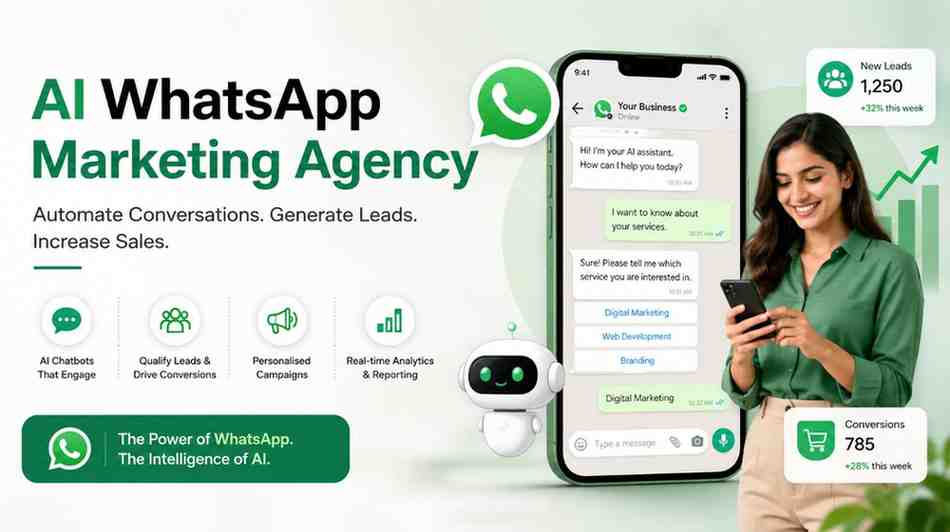
A website chatbot still has an important role. It can answer questions while someone is browsing a service page, product page or landing page. More importantly, it can understand what the visitor is trying to find and guide them towards the next useful step.
Suppose someone lands on a website of a private label supplement manufacturer and asks, “Do you manufacture protein powder under my brand?” A basic chatbot may show a generic manufacturing page. An AI chatbot can understand the question and continue with relevant questions about product type, quantity, packaging, formulation and target market.
The conversation becomes more useful because the visitor does not have to search through several pages.
WhatsApp is different.
People are already comfortable using it. They may send short messages, voice notes, product photos or several questions in one conversation. An AI chatbot marketing agency working with WhatsApp therefore needs to account for how people actually communicate, not how a neat chatbot demo behaves.
A customer might simply type, “price?” followed by a product name. Another might send a photo and ask if the same item is available. Someone else may write in Hinglish.
The system has to deal with this messy, everyday communication.
This is one reason WhatsApp chatbot marketing can work particularly well for Indian businesses. The platform is already part of daily customer behaviour. The business does not have to convince the customer to learn a new interface.
But WhatsApp automation should not become an excuse for sending endless promotional messages.
That gets irritating quickly.
Social media brings another layer. Businesses receive questions through Instagram and Facebook comments and direct messages. A person may ask about price publicly, then move to a private message. An AI chatbot can help respond to common questions and guide the person towards a more useful conversation.
For example, a fashion brand may receive repeated questions about size, delivery time, COD and exchange policies. Instead of having the social media team answer every question manually, AI can handle routine queries while more complicated conversations are passed to a person.
The important thing is continuity.
If the website chatbot knows one part of the customer’s story, WhatsApp knows another and the social media team has a third piece, the customer experience becomes fragmented. An AI chatbot marketing agency should ideally design the system so that relevant customer information can move between channels where technically and legally appropriate.
The customer should not feel like they are talking to three different businesses.
AI Chatbot Marketing for Lead Generation and Sales Conversion
Getting a conversation started is not the same as generating a good lead.
This is where many chatbot projects go wrong.
Businesses often celebrate the number of conversations started, but that number can be misleading. Ten thousand people asking a bot basic questions may be less valuable than one hundred serious prospects who provide useful information and are ready to speak with sales.
An AI chatbot marketing agency should therefore look beyond conversation volume.
The better question is what happens after the conversation starts.
For a real estate company, for example, the chatbot can ask what type of property the visitor wants, preferred location, approximate budget and buying timeline. For an education institute, it may ask about the course, academic background and preferred intake. For a B2B manufacturer, it may collect product specifications, expected quantity and delivery requirements.
The questions should follow the conversation naturally.
I strongly prefer this over long lead forms. A customer staring at twelve fields on a mobile screen may simply leave. A conversation where the questions appear one at a time can feel easier, although even conversational forms can become tedious if badly designed.
Once the chatbot has enough information, the lead can be categorised.
A high intent prospect might be offered a call with a sales representative. A person still comparing options could receive a relevant guide, case study or product explanation. Someone who is clearly not ready to buy can simply continue browsing.
This is where sales conversion becomes connected with intent.
Imagine a visitor asks about the price of a service. The chatbot gives a useful explanation, asks what the customer is trying to achieve, and then offers an estimate or consultation based on that information.
That is very different from immediately asking for a phone number.
The latter feels like a lead collection exercise. The former feels like a conversation.
For Indian businesses, there is another practical consideration. Customers often want to know the price early. Trying to hide every price behind a form or sales call can create distrust, particularly when competitors are more transparent.
Of course, not every business can publish fixed pricing. Custom manufacturing, consulting and enterprise services are obvious examples. But even there, the chatbot can explain what affects the price and collect the information needed for a quotation.
An AI chatbot marketing agency can also use campaign information to make lead conversations more relevant.
Suppose a user clicks an advertisement promoting a specific service. When they start a conversation, the chatbot can continue around that particular service instead of giving a generic company introduction.
That saves time.
It also reduces the strange experience where someone clicks an advertisement for one product and lands in a chatbot asking, “How can we help you today?”
They already told you.
Follow ups can also influence conversion.
A person who requested a quotation but did not respond may receive a contextual follow up. A customer who asked about availability can be reminded when stock becomes available. A consultation enquiry can be routed to the sales team.
But there is a limit.
More follow ups do not automatically mean more sales. Sometimes they simply mean more annoyance.
Personalisation, Customer Segmentation and Automated Conversations
Personalisation in chatbot marketing is not just inserting someone’s first name into a message.
“Hello Rahul, welcome to our website” is not meaningful personalisation.
The useful kind comes from understanding what the customer has already said and what they appear to need.
An AI chatbot marketing agency can build conversation paths around factors such as customer type, location, product interest, buying stage, previous interactions and campaign source.
Consider an ecommerce brand selling skincare products.
A first-time visitor asking about acne-prone skin should not necessarily receive the same conversation as a returning customer asking about a moisturiser they purchased last month.
Similarly, a distributor asking about bulk quantities has a different requirement from an individual consumer.
This is where segmentation becomes practical.
Customers can be grouped according to meaningful behaviour rather than arbitrary labels.
A business might have new enquiries, repeat customers, high intent leads, price sensitive prospects, existing clients needing support and people who are simply researching.
The chatbot can respond differently to each group.
A B2B company could even segment leads based on expected order size. A small buyer may need product information and minimum order quantity details. A large buyer may need a sales consultation, technical documentation or a quotation.
The automation should reflect that difference.
There is a common mistake here. Businesses sometimes try to personalise everything from the beginning. The result is a chatbot that asks too many questions before giving a simple answer.
That is not personalisation. It is friction.
A better conversation often starts with the customer’s immediate need.
Answer first.
Then ask what is genuinely necessary.
AI can also help with language preferences. Indian customers may switch between English, Hindi and regional expressions during a conversation. Businesses serving different markets may need multilingual support, but this should be tested carefully. Translating every sentence automatically does not guarantee that the meaning or tone remains appropriate.
A chatbot answering a serious financial or technical question in awkward translated language can quickly lose credibility.
There is also a question of how much automation customers actually want.
Not every interaction needs to be personalised. Sometimes people just want a delivery update.
Give them the answer and let them go.
That may be the best customer experience.
How AI Chatbot Marketing Agencies Connect Chatbots With CRM and Marketing Systems
A chatbot becomes much more useful when the information collected during a conversation does not disappear when the chat ends.
This is where CRM integration comes in.
Without integration, the sales team may receive a notification saying that someone contacted the chatbot. They then have to open the chat, read everything and manually enter the details into the CRM.
That creates another administrative task.
A properly connected system can send relevant information into the CRM automatically. Lead source, customer name, contact details, enquiry type, product interest and conversation status can be captured depending on the setup.
For example, a lead generated from a Google Ads campaign could enter the CRM with its campaign source and chatbot qualification details.
The sales team then has some context before making contact.
This matters because the first few minutes after a high intent enquiry can be valuable. If a lead sits untouched for hours because nobody noticed the notification, the marketing spend has already done its job but the business has not followed through.
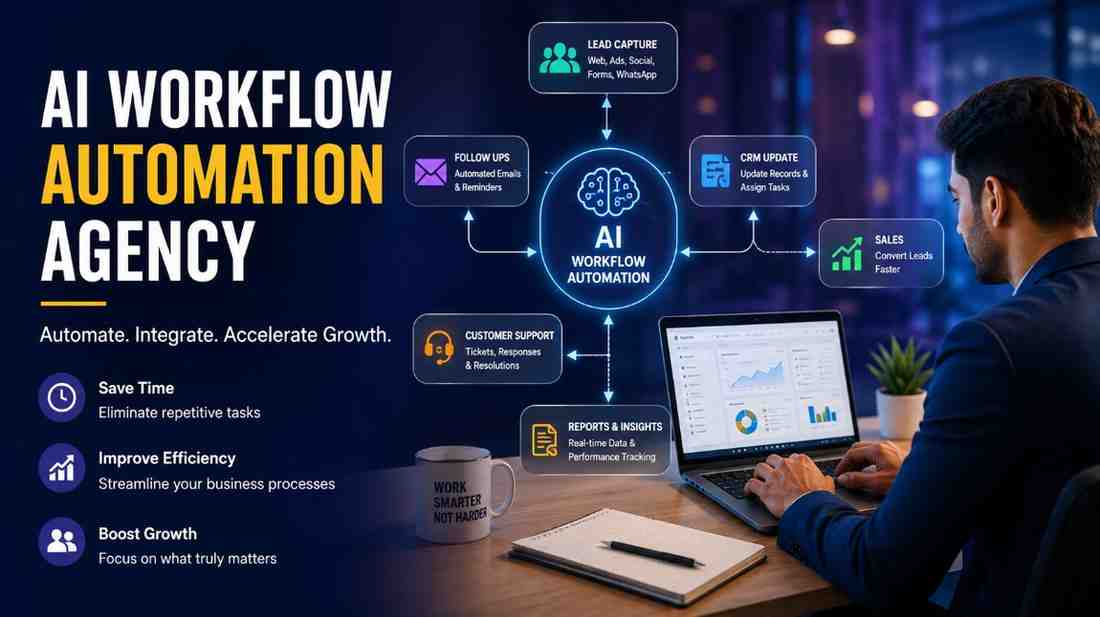
An AI chatbot marketing agency may also connect the chatbot with email marketing, WhatsApp workflows, appointment systems, customer support platforms and analytics tools.
The exact technology depends on the business.
There is no universal integration stack that makes sense for everyone.
A small local service company may only need the chatbot connected to WhatsApp and a simple CRM. A larger ecommerce company could require product catalogue integration, order management, customer data, support systems and marketing automation.
This is also where data quality becomes important.
If the CRM contains duplicate customer records, outdated phone numbers and incomplete lead information, connecting a chatbot to it does not magically fix the problem.
It can actually spread the mess faster.
I have seen businesses spend more time discussing integrations than cleaning the information that the integrations are supposed to move. It is frustrating because the problem is usually quite ordinary.
Good systems are often boring.
They pass the right information to the right person at the right time.
Analytics can then show what is happening after implementation. Businesses can examine how many conversations started, how many became qualified leads, where customers dropped off and which questions appeared repeatedly.
These insights can also improve the website and marketing campaigns themselves.
If hundreds of customers ask the same question about pricing, perhaps the website is not explaining pricing clearly enough.
If many leads ask whether a service is available in a particular city, that could point towards a new location page or local campaign.
The chatbot becomes a source of customer feedback, not just an automated responder.
Common AI Chatbot Mistakes That Can Frustrate Indian Customers
The first mistake is making the chatbot too complicated.
Customers should not have to navigate a maze before reaching a basic answer.
Another common issue is poor language handling. A customer may write, “Bhai delivery kab tak hogi?” and receive a stiff, formal response that sounds completely disconnected from the conversation.
The wording does not need to imitate slang. It just needs to sound like a normal business response.
Then there is the problem of false confidence.
If the chatbot does not know whether a product is available in a particular city, it should not invent an answer. If the pricing is not available, it should say so and provide the next useful step.
This is especially important for businesses where incorrect information has financial consequences.
Another mistake is forcing every conversation towards a sale.
Someone may simply be looking for a return policy. Asking for their phone number three times before giving the policy is not good marketing.
It is irritating.
I would also be careful with excessive WhatsApp follow ups. Indian customers are comfortable with WhatsApp, but that does not mean they want a business sending messages throughout the day.
Consent, relevance and frequency still matter.
A chatbot should also have a clear human handover.
If the customer asks for a person, there should be a straightforward route to one. Hiding the human option because the business wants to maximise automation usually creates more frustration.
There is another issue that looks minor but is not. The chatbot should remember enough context during the conversation.
If a customer has already provided their location, product requirement and budget, asking the same questions again makes the automation feel broken.
And sometimes businesses simply deploy the chatbot and never review the conversations.
That is a mistake.
Real customer chats reveal things that the original planning never anticipated. People ask unexpected questions. They use different words. They misunderstand instructions. They sometimes complain about something nobody thought would matter.
Those conversations should be reviewed.
I might be wrong here, and this may not apply everywhere, but I think the best chatbot improvements often come from the least glamorous work of reading actual customer conversations. Not dashboards. Not impressive demos. Actual conversations.
One more thing. An AI chatbot cannot compensate for a poor product, confusing pricing or slow fulfilment.
If the underlying customer experience is weak, automation simply allows the customer to reach the same frustration faster.
That is worth remembering before adding another layer of AI to the process.
For StratMarketer, the more sensible role of an AI chatbot marketing agency is therefore not to replace every human interaction. It is to make routine conversations easier, identify serious enquiries earlier, keep customer context available and give the sales or support team a better starting point when human involvement is needed.
The technology will keep changing. The basic customer expectation probably will not.
People want their question understood, they want a useful answer and they do not want to explain the same thing five times.
How StratMarketer Approaches AI Chatbot Marketing for Different Business Goals
There is no single chatbot setup that works for every business. A real estate company, ecommerce brand, hospital, education institute and B2B manufacturer may all use AI chatbots, but the conversation behind each one should be quite different.
This is where StratMarketer takes a practical approach to AI chatbot marketing.
The starting point is the business goal, not the chatbot itself.
For some businesses, the main problem is lead generation. For others, it is the number of repetitive customer queries. An ecommerce company may want help with product discovery and order related questions, while a service business may need faster qualification of enquiries coming through its website and WhatsApp.
These situations need different conversation flows.
If lead generation is the priority, the chatbot should help identify serious prospects without making every visitor complete a long questionnaire. It can ask about the service required, location, approximate budget, timeline or other information that the sales team actually needs.
There is little point collecting twenty fields if the sales executive only uses four of them.
For ecommerce businesses, the conversation can work differently. Customers may need help choosing products, understanding specifications, checking delivery information or comparing options. An AI chatbot can guide them through those questions and then move them towards the relevant product or checkout process.
For B2B companies, the conversation may need more qualification.
A manufacturer selling industrial equipment, for example, may need to know the application, required capacity, quantity and delivery location before a sales representative can provide a meaningful response. The chatbot can collect those details gradually instead of throwing a long form at the visitor.
Local businesses have another requirement.
Someone searching for a service in a particular city usually wants to know whether the business actually serves their area. StratMarketer can structure chatbot conversations around location, service availability, appointment requirements and enquiry type so that the customer gets a useful answer quickly.
The same principle applies to WhatsApp.
For many Indian businesses, WhatsApp is not just another communication channel. It is where customers ask questions, send documents, request quotations and continue conversations after first finding a business elsewhere.
A chatbot strategy that ignores this behaviour is incomplete.
StratMarketer can also look at how chatbot conversations fit into the wider marketing system. A person who comes through a paid campaign should not necessarily receive the same conversation as someone who has been reading organic search content for several weeks.
The customer’s context matters.
Another area that needs care is human handover.
Automation should handle routine work, but there are situations where a salesperson, support executive or consultant should take over. StratMarketer can build these handover points around factors such as lead quality, customer intent, technical complexity or the customer’s explicit request to speak with someone.
This prevents the common problem where customers feel trapped inside an automated system.
I personally prefer a chatbot that knows when to stop talking over one that tries to answer everything.
There is also ongoing refinement. The first chatbot version is rarely perfect because real customers behave differently from what businesses expect. Once conversations start coming in, the questions, drop offs and handover points reveal where the flow needs adjustment.
A customer might repeatedly ask something that the business assumed was obvious. Another might abandon the conversation at a particular question. Those details are useful.
They show what needs changing.
For StratMarketer, AI chatbot marketing is therefore more about conversation planning, customer intent, lead qualification and system integration than simply putting an AI chat window on a website.
The chatbot has to fit the business.
And sometimes the best decision is not to automate a particular conversation at all.
Frequently Asked Questions About Hiring an AI Chatbot Marketing Agency
What does an AI chatbot marketing agency do?
An AI chatbot marketing agency plans, develops and manages chatbot based customer conversations for marketing, sales and support purposes. The work can include conversation design, lead qualification, WhatsApp automation, website chatbots, CRM integration, follow ups and performance analysis.
The exact scope depends on the business.
Is an AI chatbot only useful for lead generation?
No.
Lead generation is one major use, but chatbots can also answer customer questions, recommend products, collect enquiry details, schedule appointments, support existing customers and manage follow ups.
For some businesses, reducing repetitive support questions may be more valuable than generating additional leads.
Can an AI chatbot work on WhatsApp?
Yes. WhatsApp can be an important part of an AI chatbot marketing strategy, particularly for Indian businesses where customers commonly use WhatsApp for enquiries and follow ups.
The implementation depends on the business requirement, WhatsApp setup and the systems that need to be connected.
Can the chatbot qualify leads before sending them to sales?
Yes.
The chatbot can ask relevant questions and identify factors such as service requirement, location, budget, timeline, product interest or expected quantity. Qualified leads can then be routed to the appropriate sales person or CRM workflow.
The questions should be limited to information that genuinely helps the sales process.
Will an AI chatbot replace my sales team?
It should not be treated that way.
A well planned chatbot can handle repetitive first level conversations and help sales teams spend more time on serious enquiries. Complex negotiations, high value consultations and relationship based selling still require people.
Trying to automate every sales conversation can actually make the experience worse.
Can an AI chatbot understand Indian customers who use Hinglish?
AI systems can handle mixed language conversations, but the quality depends on the technology, training and implementation. Businesses should test the chatbot using the actual language customers use rather than assuming that a few English examples are enough.
This is especially important for businesses serving customers across different Indian regions.
Can a chatbot be connected to a CRM?
Yes.
Depending on the CRM and technical setup, chatbot conversations can be connected with customer records, lead information, source data, qualification details and follow up workflows.
This prevents sales teams from having to manually copy every enquiry from a chat window into another system.
How does an AI chatbot help with follow ups?
It can identify conversations where a customer requested information, quotation or another action and then trigger an appropriate follow up.
The important word is appropriate.
Sending repeated generic messages is not a good follow up strategy. The timing and message should relate to what the customer previously discussed.
How much does an AI chatbot marketing agency charge?
There is no sensible single price.
The cost depends on the number of channels, chatbot complexity, integrations, conversation volume, CRM requirements, WhatsApp implementation, ongoing management and the amount of customisation required.
A basic website chatbot and a multi channel system connected to CRM, WhatsApp and marketing automation are very different projects.
How long does it take to implement an AI chatbot?
A simple chatbot can be implemented relatively quickly. More complex systems take longer because conversations, integrations, business information, testing and handover processes need to be worked through.
The technology is often not the slowest part. Getting the business logic right usually takes more thought.
Can StratMarketer create chatbots for different industries?
Yes. The chatbot strategy can be adapted according to the business model and customer journey.
A real estate company may need property qualification. An education company may need course and admission enquiries. An ecommerce brand may need product recommendations and order support. A B2B manufacturer may require technical lead qualification.
The conversation should reflect the actual business.
What information should a business prepare before hiring an AI chatbot marketing agency?
It helps to have clear information about the products or services, frequently asked questions, pricing or pricing rules, customer types, sales process, existing CRM, preferred communication channels and situations that require human intervention.
Actual customer conversations are useful too.
They often reveal problems that a business team does not notice internally.
Can AI chatbot marketing work with existing digital marketing campaigns?
Yes.
Chatbot conversations can be connected with traffic and lead generation campaigns so that visitors receive a more relevant experience based on their source and intent. This can be useful for Google Ads, social media campaigns, landing pages and other marketing channels.
But the chatbot should not be used to hide weaknesses in the campaign itself.
If the wrong audience is being attracted, better automation will not solve the basic problem.
What should I check before hiring an AI chatbot marketing agency?
Look beyond the chatbot demo.
Ask how the agency handles inaccurate answers, human handovers, CRM integration, data management, conversation testing and ongoing optimisation. Ask to see how they would handle an actual customer scenario from your business.
A chatbot can look impressive in a controlled demonstration.
Real customer conversations are much messier.
That is usually where you learn whether the system was actually planned properly.