


What an AI Pipeline Automation Agency Actually Does for Modern Businesses
When a business starts getting more enquiries, the first problem is usually not a lack of leads. It is what happens after the lead arrives.
Someone fills a form. Another person sends a WhatsApp message. A prospect comes through Google Ads. Somebody calls the sales team directly. A few leads come from LinkedIn, Instagram or a referral. Then the team starts copying details into a CRM, deciding who should call whom, sending follow up messages, checking whether the prospect replied and trying to remember which leads are still pending.
For a small business, this can work for some time. Then the pipeline becomes messy.
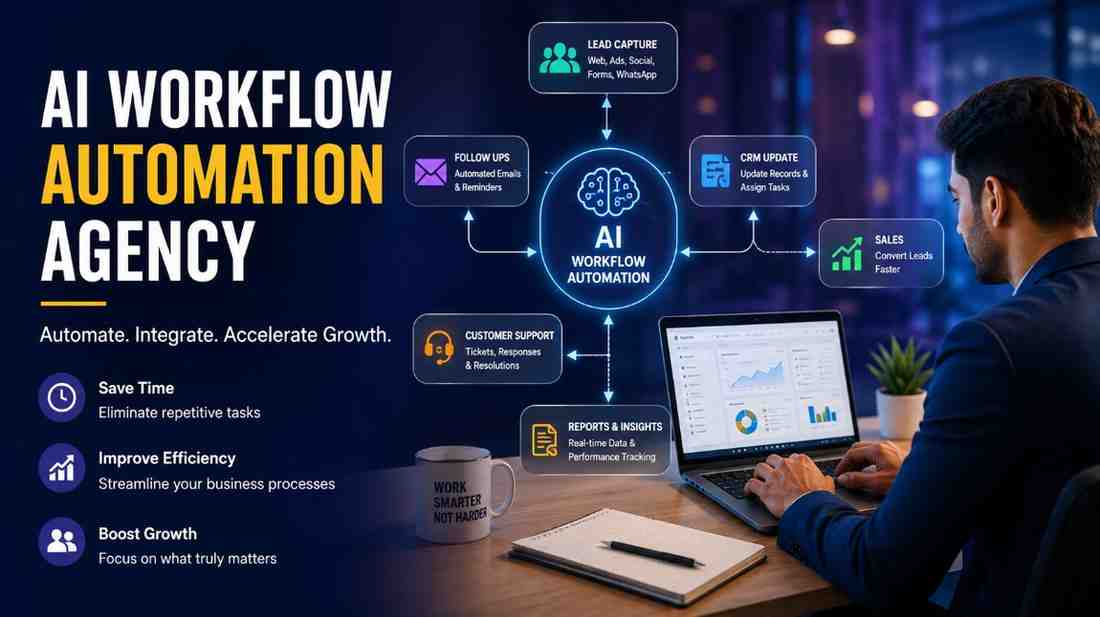
An AI pipeline automation agency works around this exact problem. Its job is not simply to add an AI chatbot to a website or connect two software platforms. The real work is to understand how enquiries move through the business and then automate the repetitive decisions, updates and follow ups that slow the process down.
This distinction matters.
I have seen businesses spend heavily on lead generation and then handle the resulting leads through spreadsheets, WhatsApp chats and personal memory. The marketing report looks good. The sales pipeline does not.
An AI pipeline automation agency looks at the complete journey from the first enquiry to qualification, sales follow up, conversion and sometimes even post sale communication. AI can help interpret lead information, prioritise prospects, generate responses and identify the next action, while automation makes sure that action actually happens.
That combination is where things become useful.
AI Pipeline Automation Is More Than Connecting Software
There is a common misunderstanding that pipeline automation means connecting a CRM with an email tool and calling the project complete.
That is the easy part.
The difficult part is deciding what should happen when something changes.
Suppose a manufacturing company receives 80 enquiries in a week. Twenty come from its website, 25 from Google campaigns, 15 from IndiaMART and the rest through referrals and social channels. Every enquiry has different information.
One prospect wants a quotation immediately. Another is still comparing suppliers. Someone else has asked only for product specifications. A few enquiries may not even fit the company’s service area.
An AI pipeline automation agency can create workflows where incoming information is assessed before it reaches the sales team. Leads can be categorised according to factors such as location, requirement, budget, product interest or buying stage. The appropriate salesperson can then receive the lead with relevant context rather than just a notification saying “New enquiry”.
That small difference saves time.
AI can also analyse conversations, forms and previous interactions to help determine whether a lead appears ready for sales contact. It should not be treated as an unquestionable decision maker. AI can misunderstand context, particularly when Indian customers mix English, Hindi and regional language expressions in the same message.
Human review still has a place.
Why Businesses Need This When Lead Volume Increases
At 10 leads a month, manual handling is rarely a serious problem.
At 100 leads, cracks start appearing.
At 500, the process itself can become a business problem.
Salespeople forget follow ups. Marketing teams cannot always tell which campaigns produced useful enquiries. CRM records remain incomplete. Duplicate leads appear. A prospect who had already spoken to someone receives a generic introductory message again.
That last one is particularly irritating from the customer’s side.
The prospect thinks, “I already spoke to your company yesterday.”
The company thinks, “The CRM says this is a new lead.”
An AI pipeline automation agency tries to remove these gaps by creating a system where lead information and customer activity move automatically between the relevant stages.
The aim is not to remove people from the pipeline. It is to stop people from wasting working hours on repetitive administration.
AI Lead Capture, Qualification and Routing Across Different Marketing Channels
For most businesses, getting a lead is not the difficult part anymore. The difficult part is knowing what to do with that lead immediately after it arrives.
A prospect may submit a website form in the morning, send a WhatsApp message in the afternoon and later click a Google Ads campaign before speaking to anyone. Another person may call directly after finding the company through search. If every channel is handled separately, the sales team ends up working from scattered information.
This is where an AI pipeline automation agency can make a practical difference.
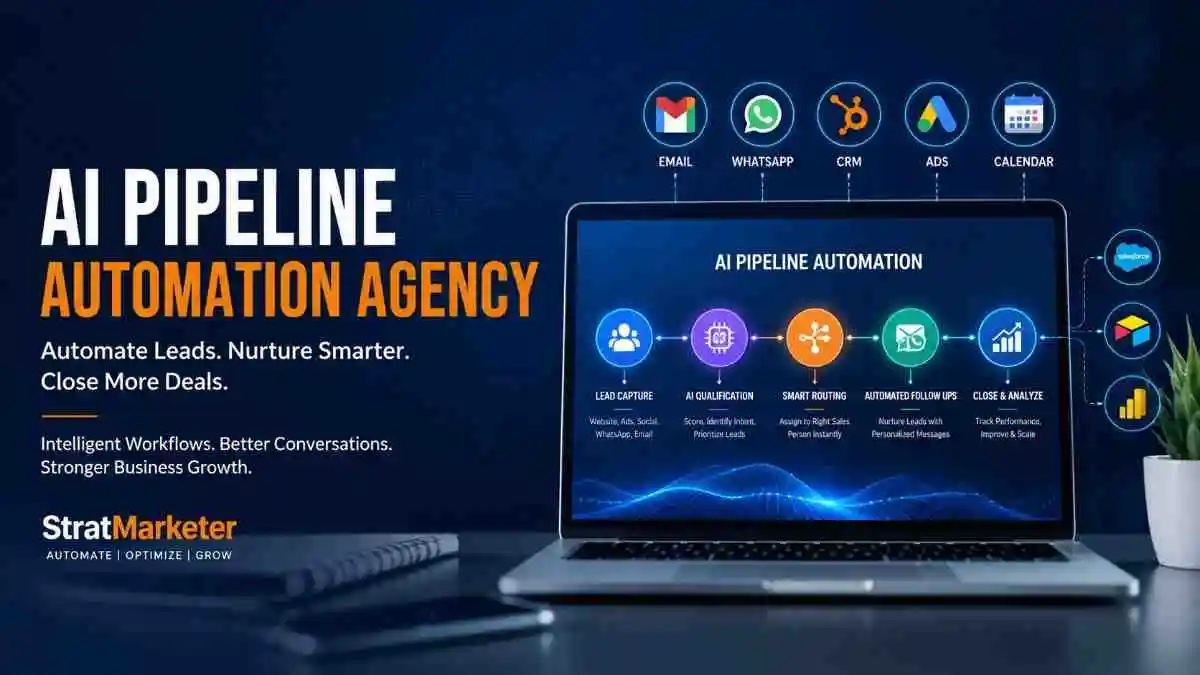
The idea is fairly simple. Bring leads from different marketing channels into a connected pipeline, understand the information available about each enquiry, decide what needs attention first and send the lead to the right person without making the customer wait unnecessarily.
That sounds neat on paper. Real businesses are not neat.
A manufacturing company may receive a serious bulk enquiry through a simple contact form that contains only a name and phone number. A different prospect may write three paragraphs explaining their requirement but still be six months away from buying. AI needs to understand that difference, while the automation layer needs to act on it.
Where AI Lead Capture Actually Starts
Lead capture begins before a lead reaches the CRM.
Website forms, landing pages, Google Ads, Meta campaigns, LinkedIn, email, WhatsApp and even offline enquiries can feed the pipeline. The problem is that these channels often collect different information.
A website form may ask for company name and requirement. A WhatsApp enquiry may simply say, “Need quotation for 500 pieces.” An advertising lead form may provide a phone number, city and selected service.
An AI pipeline automation agency can bring these enquiries into a common workflow and organise the available information.
This does not mean every channel needs the same form.
That can actually make things worse. A prospect looking for a quick quotation may not want to complete 12 fields before talking to someone.
A better system captures what is available, then asks for additional information only when it is useful.
For example, an Indian B2B manufacturer may receive an enquiry saying, “We need private label protein supplements for our gym brand.” The system could identify the broad requirement and ask a relevant follow up question about quantity or product preference instead of sending a generic message asking the customer to “tell us more.”
That feels more like a conversation.
Qualification Is Where AI Becomes More Useful
Not every lead deserves the same sales response.
A business selling high value industrial machinery may receive enquiries from students, consultants, distributors, actual buyers and people simply looking for product information. Sending every enquiry directly to a senior salesperson wastes time.
AI can help classify these leads.
The qualification criteria should come from the business. AI should not invent the rules.
A company may consider a lead high priority when the prospect has a defined requirement, commercial intent, suitable location and a realistic buying timeline. Another company may prioritise different signals.
The AI system can examine the available information and place the enquiry into an appropriate category.
A simple example could be:
High intent: “We need 10 machines for our new plant and want a quotation this week.”
Medium intent: “Please share machinery specifications and approximate pricing.”
Low intent: “What types of machines do you manufacture?”
All three are legitimate enquiries. They simply need different handling.
I would be careful about treating AI scores as absolute truth. A low scoring enquiry can sometimes become a large customer. I have seen this happen with B2B businesses where the first message looked casual, but the person was actually evaluating suppliers on behalf of a much larger organisation.
So AI should prioritise.
It should not dictate everything.
Routing Leads to the Right Salesperson
Once a lead has been qualified, the next question is who should handle it.
This sounds like a basic CRM function, but routing becomes complicated when a business has several products, territories or sales teams.
A company selling across India may have separate teams for North, South, West and East India. Another may divide sales by product category. A software company may route enterprise accounts to senior representatives while smaller accounts go to an inside sales team.
An AI pipeline automation agency can combine these rules with information from the lead.
For example, a lead from Pune looking for industrial equipment can be routed to the relevant regional salesperson. A lead from Bengaluru asking about enterprise software can be assigned to someone handling larger accounts.
The salesperson receives the enquiry with context instead of opening multiple platforms to understand what happened.
That context matters.
A notification saying “New lead from Google Ads” is not particularly useful.
A notification saying the prospect came through a particular campaign, requested a quotation, mentioned a specific product and has not been contacted yet is far more actionable.
What Happens When Leads Come From Multiple Channels
This is where duplicate leads become a real headache.
The same prospect might click an advertisement, visit the website and then send a WhatsApp message. If every interaction creates a separate record, the sales team may unknowingly contact the same person three times.
AI and CRM automation can help identify potential duplicates using information such as phone numbers, email addresses, company names and conversation history.
It is not always perfect.
Indian names can be entered differently. Companies may have several contact numbers. Employees may use personal Gmail addresses while representing a company. One person might initially enquire from a mobile number and later send an email from a corporate address.
The system needs sensible matching rules and human review for uncertain cases.
Automating CRM Updates, Lead Nurturing and Sales Follow Ups Without Losing Personalisation
CRM updating is one of those jobs everyone agrees is important and almost nobody enjoys doing.
After a sales call, someone needs to update the lead stage. After sending a quotation, the opportunity needs to be moved forward. If the customer asks for a revised proposal, that information needs to be recorded.
When salespeople are busy, these updates are often delayed.
Then management looks at the CRM and wonders why the pipeline is not moving.
An AI pipeline automation agency can automate many of these routine updates. A form submission can create a record. A lead can be assigned automatically. A completed interaction can trigger a task. Approved conversation data can be summarised and added to the relevant CRM record.
This reduces administrative work, but there is a limit.
The system should not write everything it sees into the CRM without control. Poor summaries can create confusion just as easily as missing notes.
The useful approach is to capture information that matters to the next person handling the account.
For example, instead of storing a huge conversation transcript, the system might record that the customer is interested in a particular product, needs delivery within a specific period and requested a revised quotation.
That is enough for the next sales conversation.
Follow Ups Should Reflect the Customer’s Situation
Automated follow up is often where companies become too aggressive.
A prospect asks for a quotation. The system sends an email immediately, another message after two days, another after four days and another after seven days.
The customer may have already told the salesperson that internal approval will take three weeks.
Why keep chasing them every few days?
Good automation remembers context.
If the customer says they will make a decision next month, the workflow can create a follow up around that expected date instead of treating the lead as an abandoned opportunity.
Personalisation is not just putting the person’s first name into an email.
It means the message should make sense given what has already happened.
That distinction is often missed.
AI Can Help With Lead Nurturing Too
Not every prospect is ready to buy today.
Some need technical information. Some are comparing suppliers. Some need pricing approval. Others are waiting for a project to receive funding.
Lead nurturing gives these prospects a reason to remain connected without forcing the sales team to manually follow every conversation.
AI can help determine what kind of information may be relevant based on the prospect’s earlier interactions.
For example, someone enquiring about solar equipment may receive technical information first, followed later by an installation case study or commercial details. Someone asking about a software service may receive product information, use cases and a suitable consultation option.
The sequence should still be controlled by the business.
I am not comfortable with completely unrestricted AI messaging for serious B2B sales. One wrong statement about pricing, delivery or technical specifications can create a problem that a hundred correct messages cannot undo.
Connecting AI Pipeline Automation With CRM, Email, WhatsApp and Other Business Tools
The automation becomes more useful when it connects the systems a business already uses.
A typical setup might involve a website, CRM, Google Ads, email, WhatsApp, payment software and internal sales tools.
These systems often contain pieces of the same customer journey.
The CRM knows the sales stage.
Email knows what was communicated.
WhatsApp may contain the actual customer conversation.
The advertising platform knows where the lead originated.
Without integration, employees become the connection between these systems.
That is expensive in terms of time and it creates opportunities for mistakes.
An AI pipeline automation agency can connect these tools through supported integrations, APIs and workflow platforms. The exact technology depends on the software stack.
The important part is not how many tools are connected.
It is whether the information moves correctly.
WhatsApp Needs Special Care in India
For many Indian businesses, WhatsApp is not just another communication channel. It is often where the actual sales conversation happens.
A customer may ask for a catalogue on WhatsApp, send product images, share a requirement through a voice note and then disappear for a week before returning.
Automation needs to respect that behaviour.
A business should not treat WhatsApp like an email newsletter system.
Message timing, approved templates, customer consent, conversation context and platform rules all matter. There also needs to be a clear handoff when a customer wants to speak to a person.
A useful system can notify the salesperson that a prospect has replied and stop the automated sequence.
That is a small rule with a big practical impact.
Email and CRM Integration
Email automation can work particularly well for longer B2B sales cycles.
When a quotation is sent, the CRM can record the event. If there is no response after an appropriate period, a task can be created. If the customer replies, the sales stage can be updated or the salesperson can be notified.
AI can also help summarise long email threads so that a salesperson does not have to read 20 messages before a call.
But summaries need verification in important accounts.
A missed sentence about delivery conditions or payment terms can change the entire meaning of a conversation.
Other Business Tools Matter Too
Depending on the business, pipeline automation may connect with calendars, customer support systems, ERP platforms, lead marketplaces, forms, call tracking systems and internal databases.
The goal is to reduce unnecessary manual movement of information.
If a salesperson has to copy the same customer information from a lead form into a CRM and then again into an ERP, there is a process problem.
Automation should remove that repetition where practical.
Common AI Pipeline Automation Mistakes That Create More Problems Than They Solve
The first mistake is automating before understanding the process.
A business may buy several automation tools because someone demonstrated an impressive AI workflow. Then the team discovers that its sales stages are unclear and nobody agrees on what “qualified lead” actually means.
The software was never the main problem.
Another mistake is trying to automate every conversation.
Some customer interactions need judgement. If a buyer is upset, negotiating a large order or asking something unusual, the system should hand the conversation to a person.
The third mistake is poor data.
If phone numbers are missing, lead sources are inconsistent and CRM stages are unreliable, automation will not magically clean everything up.
It may simply create a larger mess faster.
Another problem is excessive follow up.
Businesses sometimes assume that more messages mean more conversions. That is not always true. A customer who has ignored three relevant messages may not become more interested because a fourth one arrives automatically.
There is also a risk of overtrusting AI qualification.
A model can identify patterns, but it does not know everything about a buyer.
A person who writes a short enquiry may be a major decision maker. Someone who fills a detailed form may only be doing research.
This is why I prefer AI assisted prioritisation rather than blind automated rejection.
One more mistake is failing to create an exit route.
Every automated sequence should have conditions for stopping, escalating or handing over to a human.
Otherwise the workflow continues simply because nobody told it when to stop.
Measuring Lead Quality, Response Time, Conversion Rates and Pipeline Performance
Once the pipeline is automated, measurement becomes much more useful.
But businesses need to look beyond lead volume.
A marketing campaign that produces 500 leads sounds successful until you discover that only 12 were qualified and one converted.
Another campaign may generate 70 leads and produce 10 serious opportunities.
The second campaign may be far more valuable.
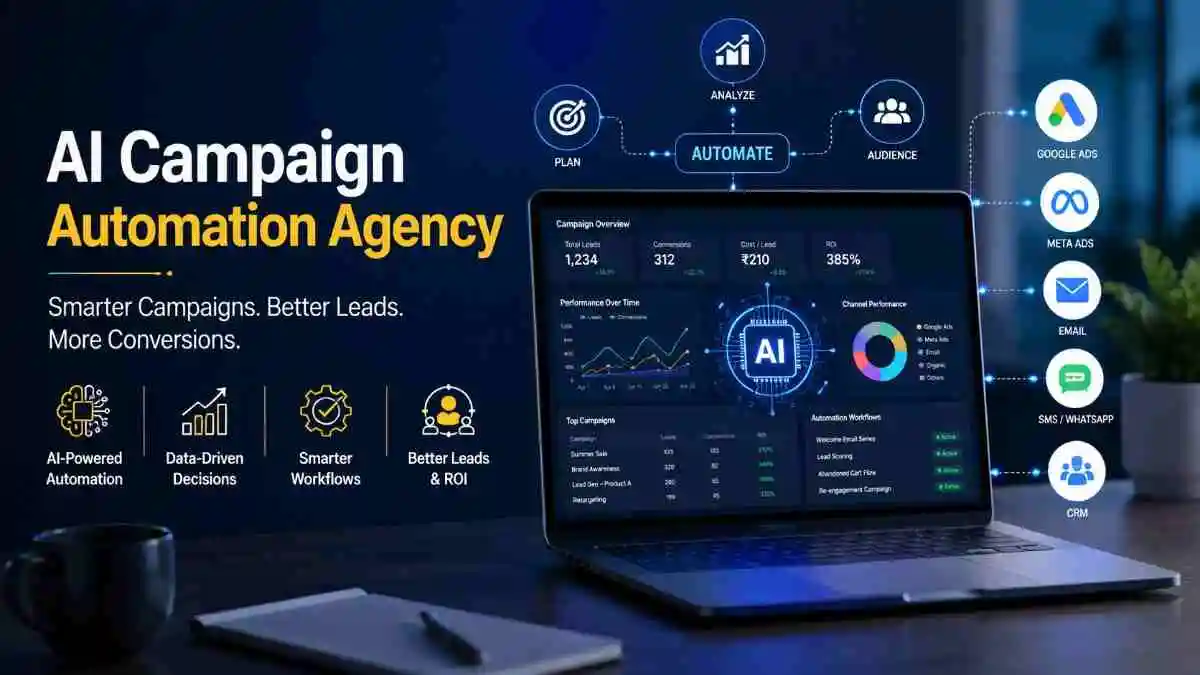
An AI pipeline automation agency can help businesses track several important measures together.
Lead quality tells you whether the incoming enquiries match the business’s actual customer profile.
Response time shows how quickly sales teams act after a lead arrives. For many businesses, a delay of several hours can matter, especially when the customer is comparing multiple suppliers.
Conversion rate shows how many leads move through the pipeline and eventually become customers.
Pipeline velocity can help identify whether opportunities are moving or sitting at one stage for too long.
Lead source performance connects marketing activity with actual sales outcomes.
The numbers should be read together.
A low response time is good, but not if salespeople are responding quickly to poor quality leads. A high conversion rate is encouraging, but not if the sample is tiny.
What StratMarketer Should Look at When Reviewing Pipeline Performance
For StratMarketer, the useful question is not simply whether automation is running.
The question is whether the pipeline is behaving better.
Are leads reaching the right salesperson faster?
Are fewer enquiries being forgotten?
Are follow ups happening at the correct stage?
Are marketing channels producing better quality opportunities?
Is the CRM giving management a reliable picture?
Are salespeople spending less time on repetitive administration?
These questions give a more realistic view of AI pipeline automation.
There is also a human metric that does not always appear in dashboards.
Does the sales team actually trust the system?
If salespeople feel that the automation sends irrelevant leads, creates unnecessary tasks or writes inaccurate notes, they will eventually work around it. They may keep their own spreadsheets or WhatsApp notes.
Once that happens, the pipeline becomes fragmented again.
I have seen this kind of resistance more than once. It is frustrating because the technology may be perfectly capable, but the workflow does not fit the way people actually work.
Sometimes the solution is not another feature. It is removing one.
The Better Way to Approach AI Pipeline Automation
An AI pipeline automation agency should start with the business process, not with a list of AI features.
Map where leads arrive.
Understand what information is collected.
Define qualification clearly.
Decide who receives each type of lead.
Create sensible follow up rules.
Connect the important tools.
Then introduce AI where interpretation is genuinely useful.
That order matters.
A simple automation that works every day is usually more valuable than an impressive AI workflow that salespeople stop trusting after two weeks.
And there will always be exceptions. A customer may call instead of filling the form. Someone may send a voice note. A salesperson may forget to update the CRM. A large account may require a completely different process.
The pipeline has to survive those situations.
I might be wrong here, but I think that is the real test of an AI pipeline automation agency. Not whether the workflow looks clever in a presentation, but whether it continues to make sense when an actual busy sales team starts using it on a Monday morning.
How to Choose the Right AI Pipeline Automation Agency for Your Business
Choosing an AI pipeline automation agency can look easier than it actually is. Search online, compare a few agencies, look at the tools they use, check their pricing and choose one. In practice, that approach can leave a business with a collection of connected software and no clear improvement in the sales process.
The first thing I would look at is not the AI.
I would ask the agency to explain what they think is wrong with the existing pipeline.
If they immediately start talking about chatbots, AI agents, CRM integrations and automation platforms without first asking where leads are being lost, how salespeople work and what the customer journey looks like, I would be cautious.
An AI pipeline automation agency should understand the business process before deciding what to automate.
This matters particularly for Indian businesses because sales processes are rarely identical across industries. A manufacturer handling distributor enquiries will have different requirements from a real estate company, a healthcare service provider or a B2B technology firm. Even two companies selling similar products can have completely different lead handling processes.
Start With the Problem, Not the Technology
A business might say, “We want AI pipeline automation.”
That is the starting point, not the actual requirement.
The real problem may be that website leads are not reaching sales quickly enough. Perhaps enquiries from Google Ads are sitting in email inboxes. Maybe salespeople are forgetting quotation follow ups. Perhaps the CRM has not been updated properly for months.
These are different problems.
An experienced AI pipeline automation agency should investigate them before recommending a solution.
For example, imagine an industrial company receiving 150 enquiries every month. Marketing is generating leads through SEO, Google Ads and industry directories. The company has a CRM, but salespeople still maintain separate Excel sheets because they do not trust the CRM data.
Adding another automation layer would probably make little sense.
The CRM process needs attention first.
This is one of the areas where I disagree with the common belief that more automation is always better. Sometimes a business needs fewer tools and clearer processes rather than another AI system.
Ask How the Agency Understands Your Sales Process
A good agency should ask uncomfortable but useful questions.
How does a lead enter the business?
Who receives it?
How quickly is someone expected to respond?
What makes a lead qualified?
What happens after the first call?
When is a quotation sent?
How are follow ups handled?
When is an opportunity marked as lost?
What happens when the customer comes back after several months?
If the agency cannot discuss these practical details, it may be more interested in selling software than solving a pipeline problem.
An AI pipeline automation agency should be able to sit with a sales manager and understand what actually happens on an ordinary working day.
Not the ideal process.
The real one.
Look at Integration Experience
Pipeline automation rarely lives inside one platform.
A typical business may use a website, CRM, email, WhatsApp, advertising platforms, calendars, lead forms, customer support software and accounting or ERP systems.
These systems need to exchange information correctly.
Ask the agency which CRM platforms and business tools it has worked with. More importantly, ask what happens when an integration fails.
That question tells you quite a lot.
A lead should not disappear because one API connection stopped working overnight.
There should be logging, alerts, fallback processes and some level of human visibility.
The technical details may not be interesting to the business owner, but they matter when the pipeline becomes responsible for hundreds of enquiries.
Ask for a Workflow, Not Just a Tool List
Some agencies will tell you they work with a long list of AI and automation platforms.
That is not necessarily useful.
Knowing that an agency has access to many tools does not tell you whether it can build the right workflow.
Ask them to explain a simple scenario.
Suppose a prospect submits a form from a Google Ads campaign at 10:30 in the morning. What happens next?
A sensible explanation might cover lead capture, duplicate checking, CRM creation, qualification, assignment, sales notification, follow up scheduling and escalation if the lead remains untouched.
Then ask what happens if the prospect replies.
What happens if the salesperson does not respond?
What happens if the customer says they are not ready?
What happens if the customer asks for a quotation?
These exceptions reveal whether the workflow has actually been thought through.
Do Not Choose an Agency Just Because It Uses AI
This sounds obvious, but it happens.
A business owner sees an impressive AI demonstration and assumes the agency understands sales automation.
A clever demonstration is not proof of a reliable production system.
AI can summarise conversations beautifully and still make mistakes with commercial information. It can classify leads quickly and still misunderstand an unusual enquiry. It can draft a convincing message and still use the wrong context.
The agency should explain how it handles these risks.
Human approval should be possible where necessary.
There should be rules around what AI can and cannot decide.
Important information such as pricing, commitments, contractual terms and technical specifications should not be allowed to change simply because an AI model generated something.